Our mechanical designs explore a screw-free, spring-free mechanism that students can understand and assemble. We’re testing how they move, how reliably they work, and how to make them easier to build.
A closer look at our prototyping work.Exploring form, movement, and construction.
Prototype 01In development · unvalidated
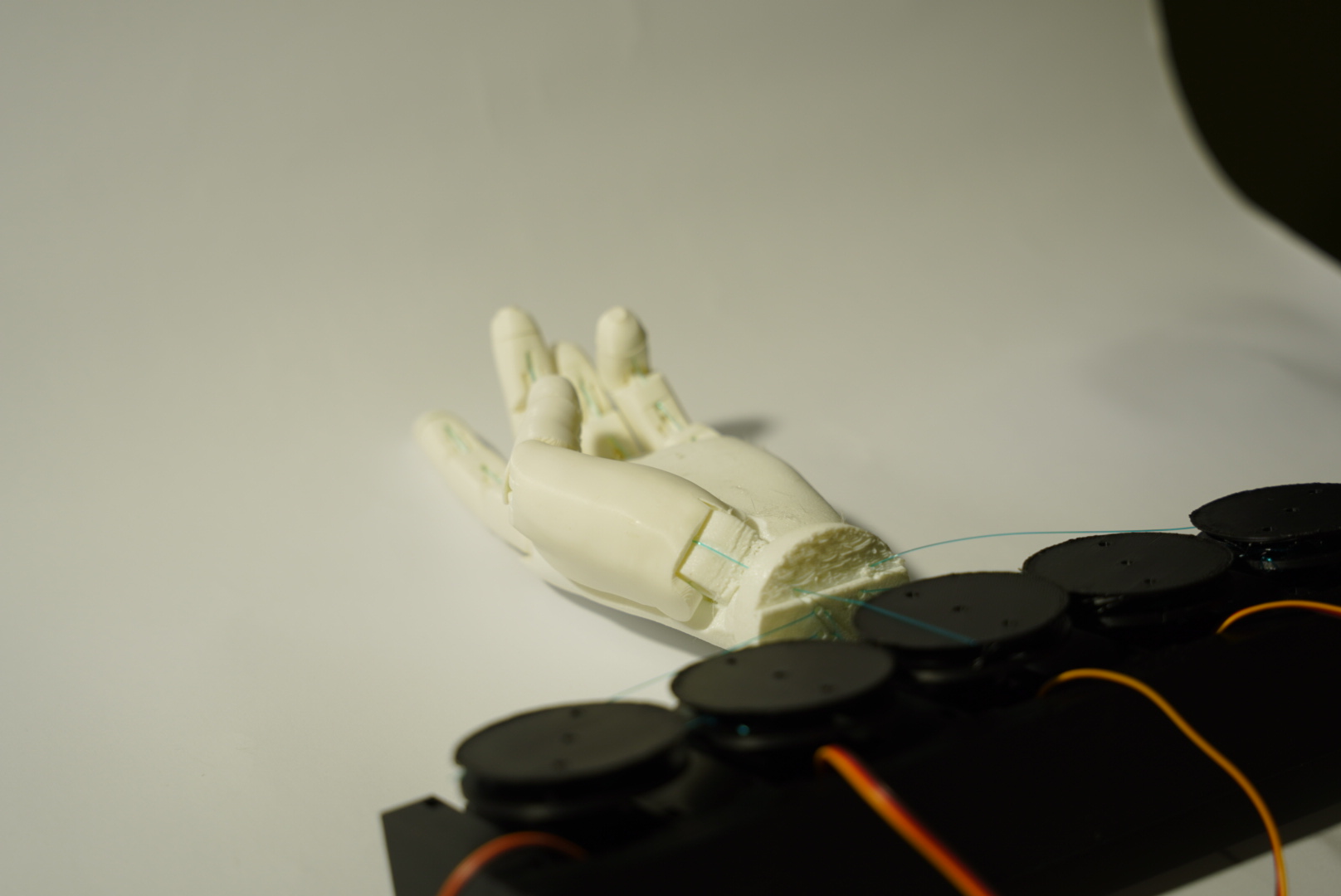
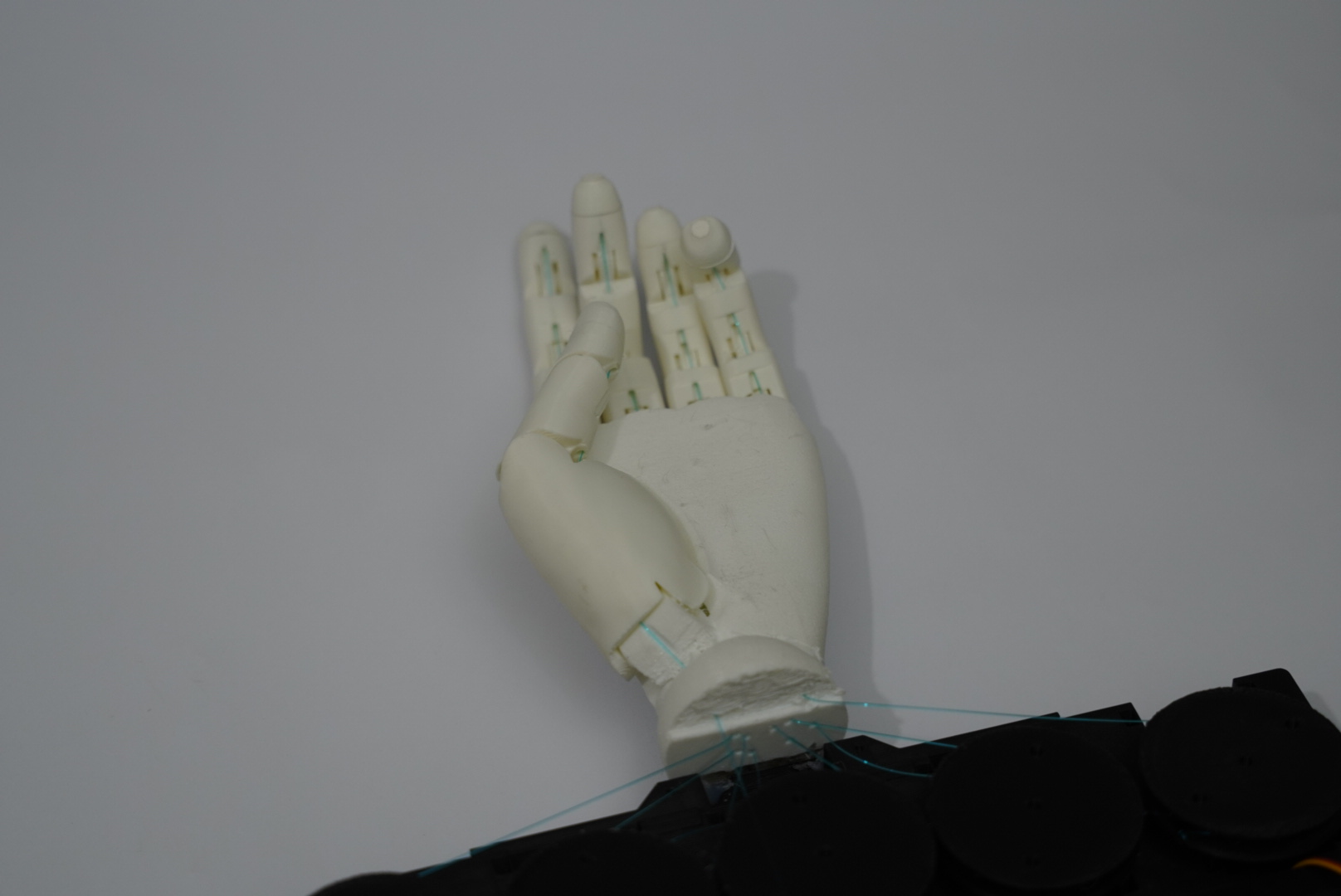
Dual-String Hand
This design uses two strings for finger movement: one line pulls the fingers toward a grip,
while a second line pulls them back toward the open position.
How it works & what we’re testing
Approach: active pull in both directions, with the two strings replacing the need for a spring-based return mechanism.
Build philosophy: a screw-free, spring-free mechanical design target with as few unfamiliar parts as practical.
What we are studying: control, tension, routing, repeatability, and whether a first-time student builder can understand and assemble the mechanism with confidence.
Status: experimental. We are still testing whether the mechanism is reliable enough to work consistently.
This concept simplifies the tendon system by using one string to close the fingers.
A flexible TPU slab acts as the return element, helping the fingers move back toward their open position when tension is released.
How it works & what we’re testing
Approach: one pulling line plus a flexible TPU return element, avoiding a separate metal spring.
Build philosophy: a screw-free, spring-free mechanical design target that reduces part count and assembly complexity.
What we are studying: whether the simpler tendon layout can provide smooth, repeatable movement while remaining approachable for new builders.
Status: experimental. The TPU geometry, stiffness, durability, and return force are still being tested.
Alongside our mechanical prototypes, we are exploring whether natural rubber derived from tree latex
can play a useful role in a more sustainable hand design. The idea is still at an early research and prototyping stage.
We have not yet proven that the material will provide the strength, flexibility, durability, safety, or long-term performance required.
The purpose of this work is to let students investigate not only how a prosthetic mechanism can move,
but also how material choice affects accessibility, sustainability, manufacturability, and repairability.
Important:
These are educational research prototypes, not certified medical devices. They are not intended for clinical use,
to replace professional prosthetic care, or to be presented as proven solutions. Failed tests and design changes are part of the project and will be documented as we learn.